
Skip to product information
1 of 8

Portuguese Bobbin Bed in Oak | Restored and Painted | 135 cm

Regular price
€1.475,00
Regular price
Sale price
€1.475,00
Tax included. Shipping calculated at checkout.

Unique piece, no restocking

There are beds to sleep in. And there are beds to contemplate before getting into them.

This one is the latter.

Warranty: +280 reviews: 4.9 /⭐️⭐️⭐️⭐️⭐️ Flawless delivery and unique pieces with premium service

RESTORED BY PROFESSIONALS

  • Structurally reviewed
  • Adjusted and reinforced where necessary
  • Treated against wood-boring insects and free from woodworm
  • Hand sanded
  • Color customization in our workshop
  • Furniture ready for use

FREE Shipping (Peninsular Spain)

Returns 14 days (Peninsular Spain)

100% Easy and Secure Payment

Easy financing without expenses or interest

DESCRIPTION

Some beds are simply for sleeping. And some beds are admired before turning in for the night.

This is one of the latter.

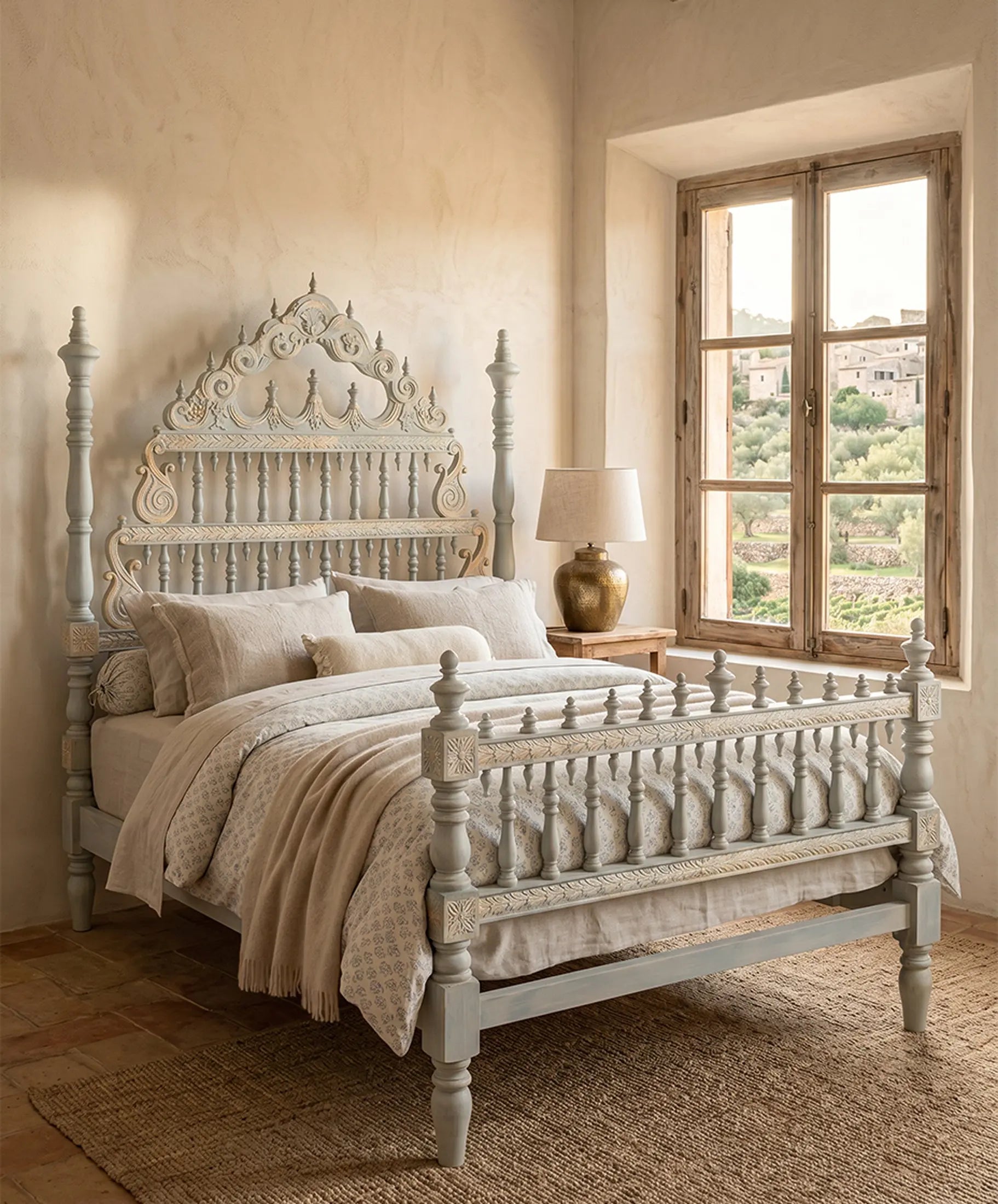
The Portuguese "bilros" bed is one of the most recognizable types of bed in Iberian cabinetmaking tradition. It originated in Portugal in the 17th century, traveled to Brazil with the colonists, and returned to the Peninsula with a unique identity unmatched by any other bedroom furniture. This piece, from the mid-20th century, is a late example of that tradition — still crafted from solid oak, with hand-turned balusters and headboard carving that modern workshops won't produce to order at any price.

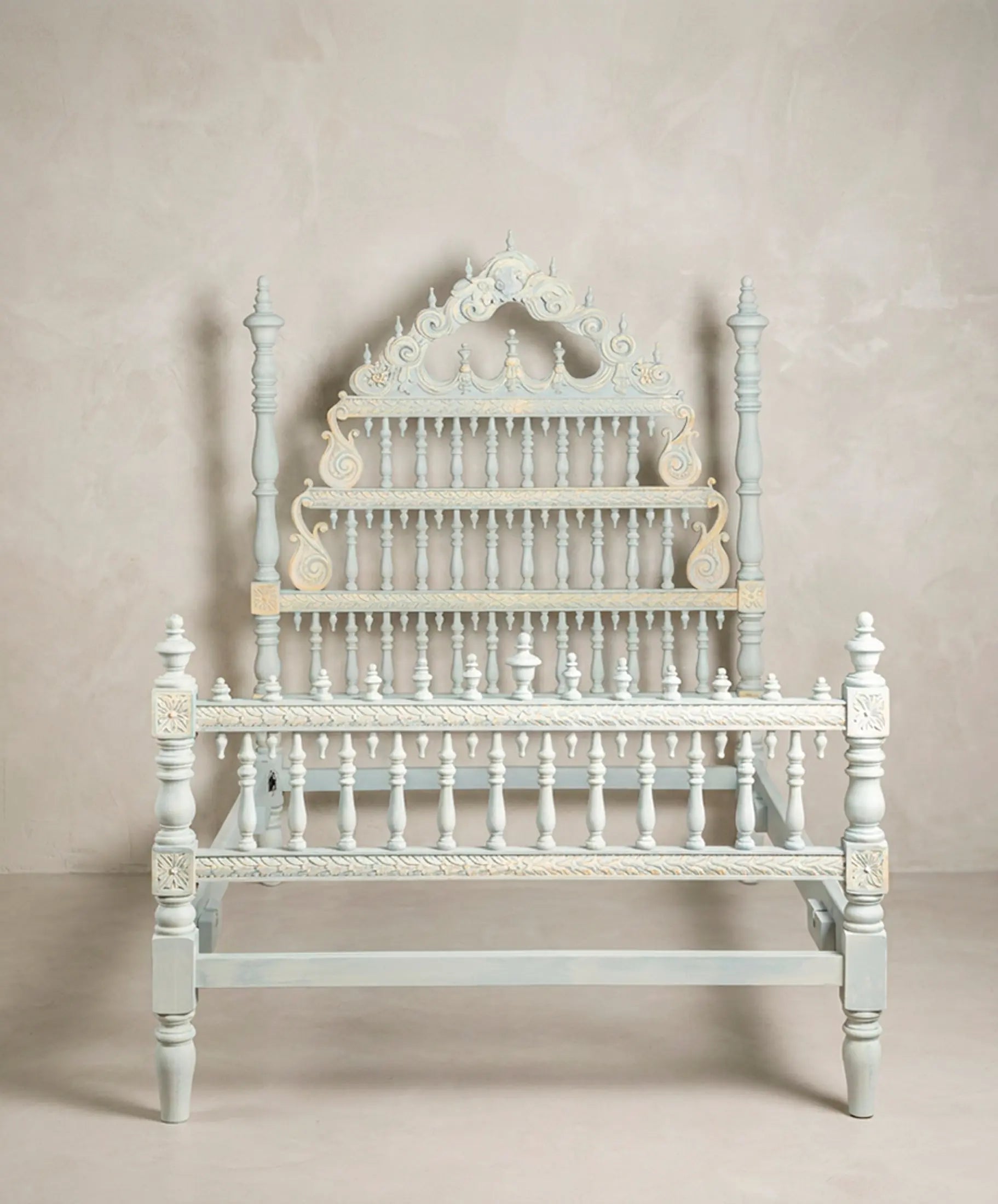
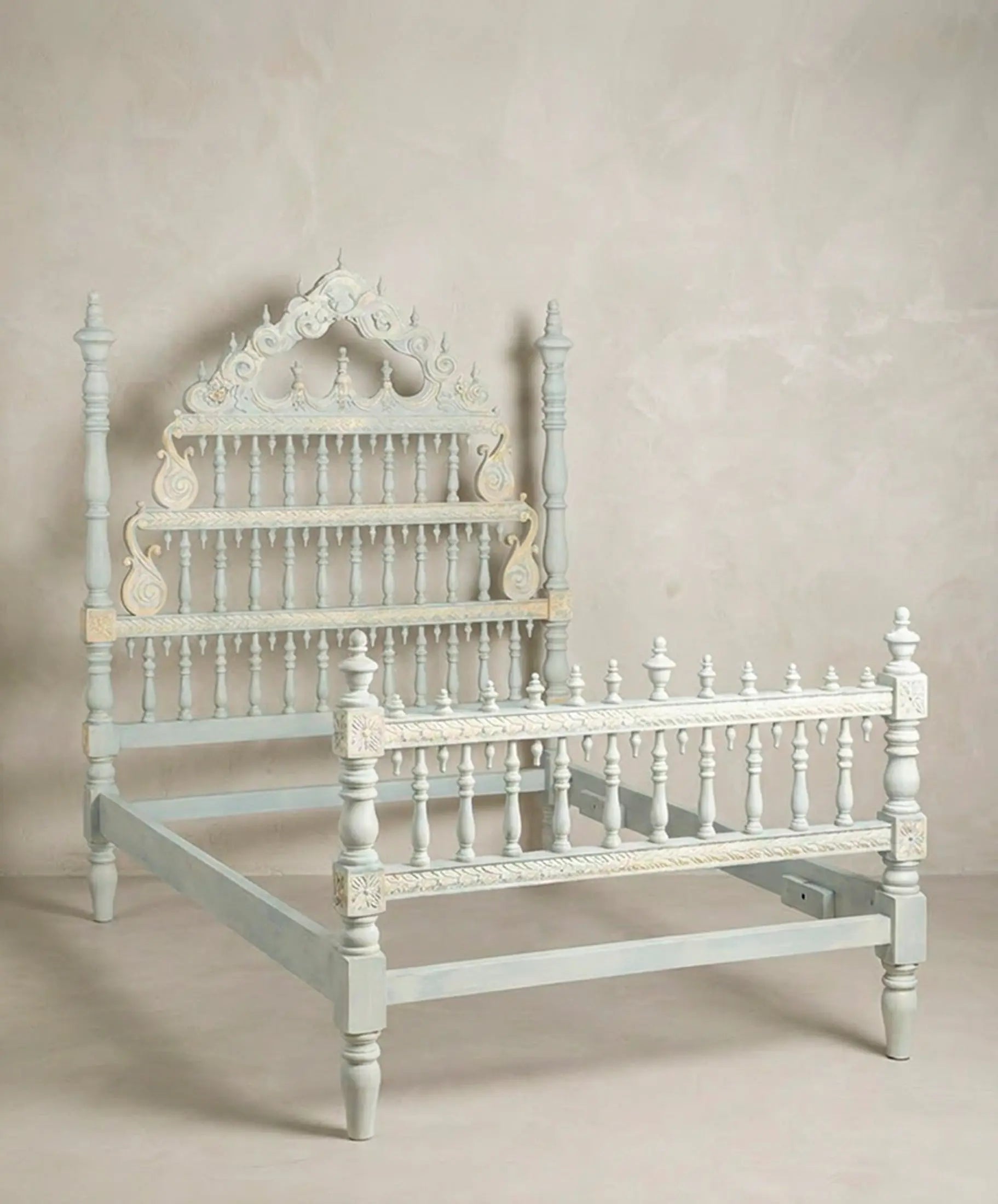
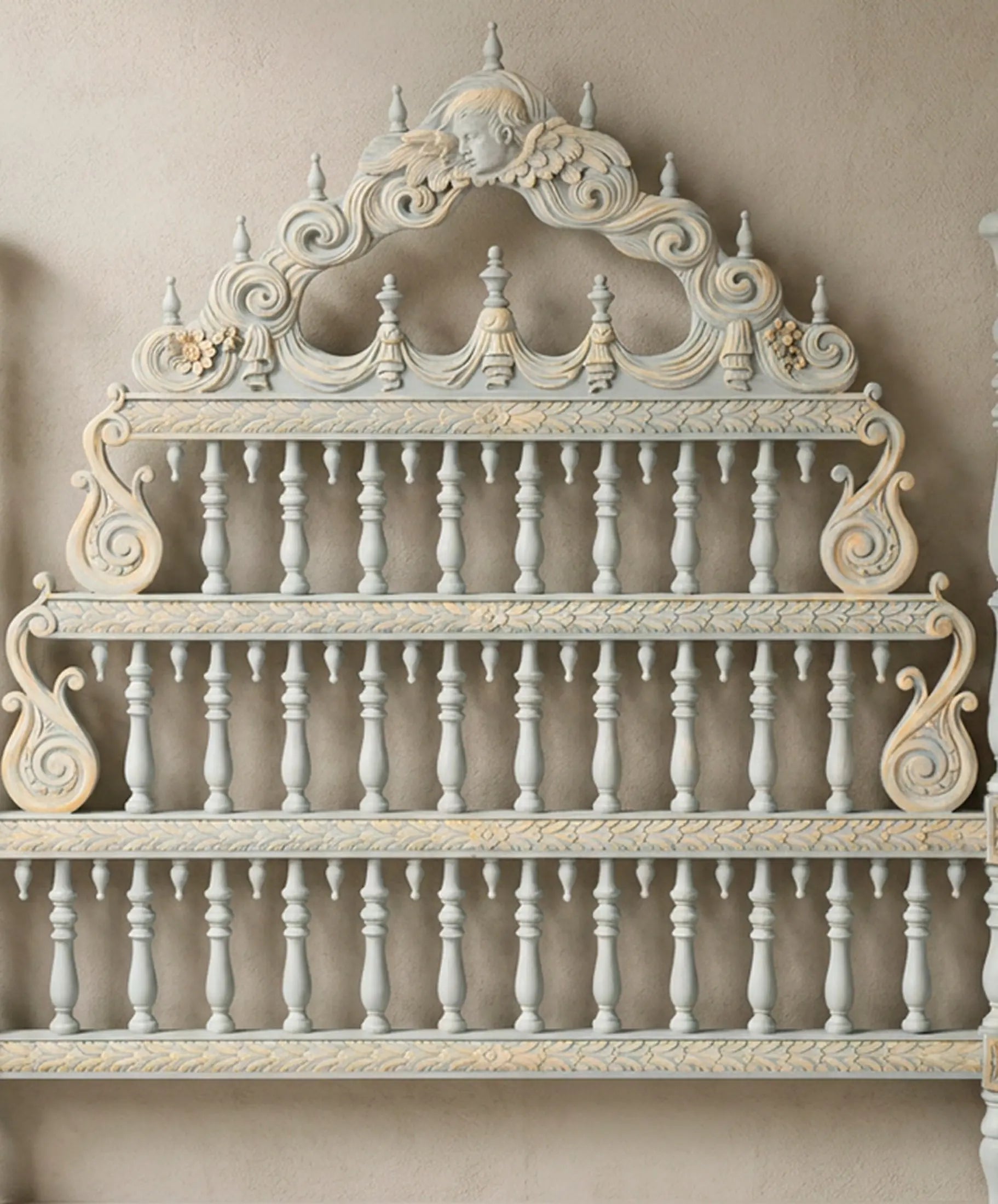
The headboard is the heart of the piece. At the top, a winged cherub carved in relief presides over a composition of scrolls, acanthus, and floral garlands that unfolds symmetrically to the sides. Below, two rows of balusters — inverted pear-shaped at the top, vase-shaped at the bottom — separated by friezes of continuously carved acanthus leaf. The sides are enclosed with prominent S-scrolls. All framed by four columns with turned pineapple finials.

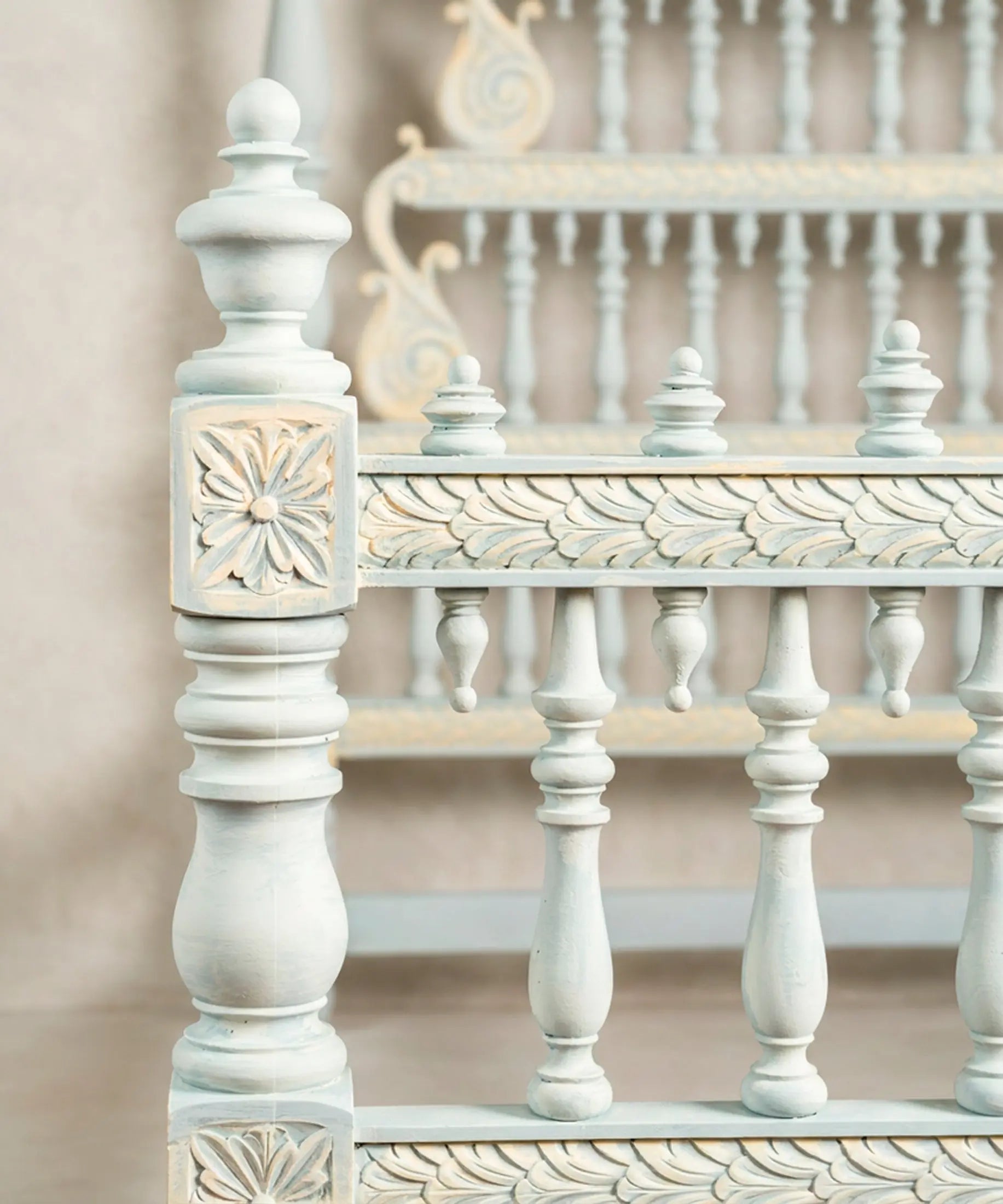
The footboard maintains the same language: floral medallions carved on the corner posts, an acanthus frieze on the upper crossbar, and balusters with mixed finishes that create an unmistakable visual rhythm.

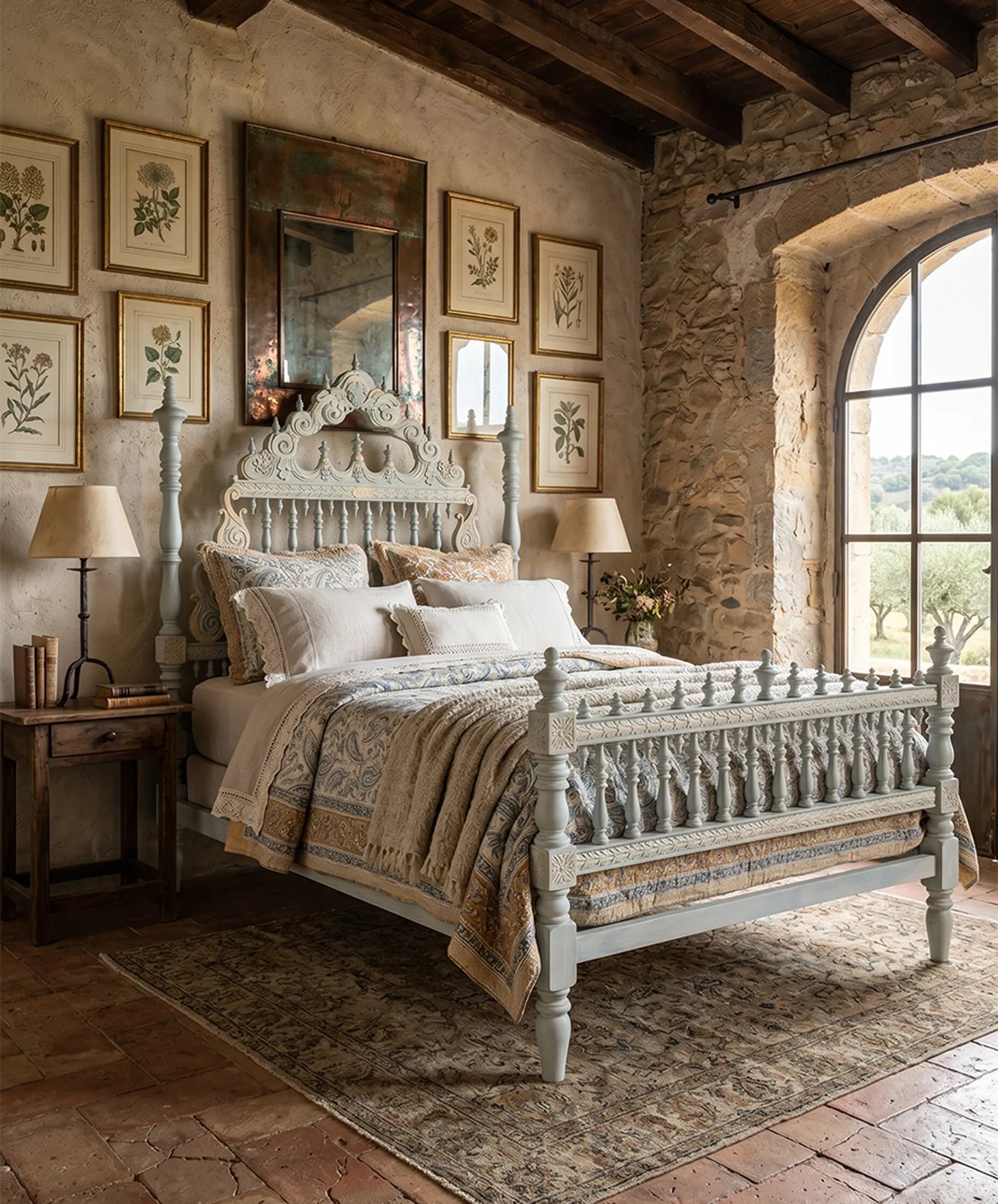
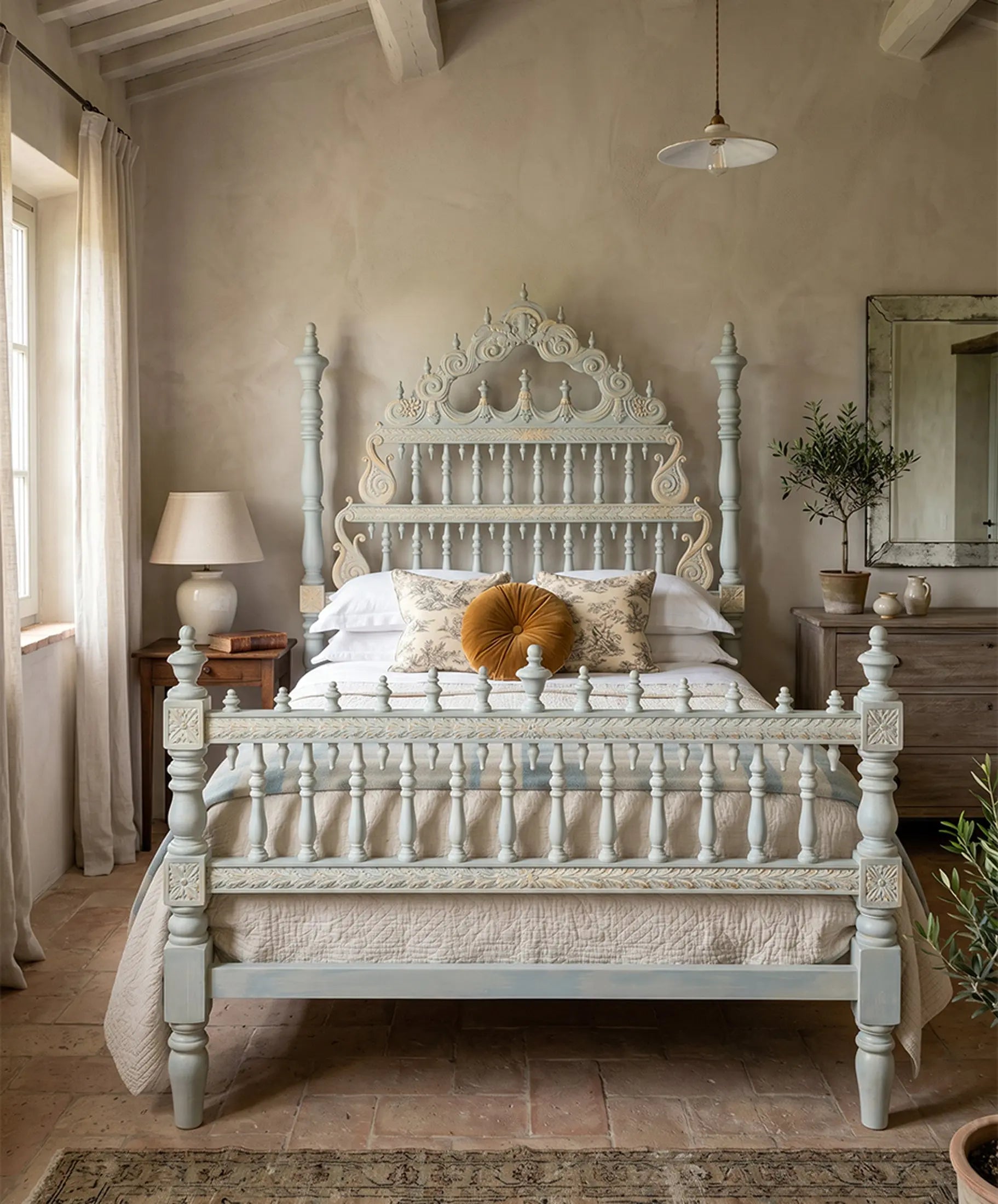
The finish is celadon gray — a very soft stone blue — with the carved backgrounds in cream/ivory that reveal the depth of the relief. A color that works equally well in a bedroom with natural tones or one with white walls or Venetian stucco.

Restored and painted in our workshop in Navalcarnero. Ready for a 135 × 180 cm mattress.

No two are alike. There will be no replenishment.

── WHAT WE LIKE MOST ABOUT THIS PIECE ──

→ The cherub on the headboard: carved in relief, with outstretched wings and a downward-gazing face. It's the detail that transforms the headboard into a piece of applied art, not just cabinetmaking.

→ The continuous acanthus leaf friezes: on both the headboard and footboard, the carving runs uninterrupted from end to end. The level of execution is what distinguishes furniture made with care from that made in haste.

→ The celadon color with cream backgrounds: the decision to leave the carved backgrounds in the natural tone of the prepared wood creates an interpretation of the decoration that a uniform color would have erased. In our workshop, we knew when to stop.

── RESTORED IN OUR WORKSHOP IN NAVALCARNERO, MADRID ──

The bed has been completely disassembled, its structure and joints inspected, treated against wood borers, and prepared before painting. The celadon gray finish was applied by hand, respecting the carving, allowing the reliefs to breathe. All original balusters are complete and intact. The side rails and mounting system function correctly.

It arrives ready to take its place.

A piece selected and restored by Antique Arte y Decoración —
specializing in antique furniture since 2015, with our own workshop in
Navalcarnero and serving over 3,500 families across Spain.

Material AND FINISH

Style: Portuguese spindle bed / Iberian tradition
Material: Solid oak
Finish: Hand-painted in celadon grey (soft stone blue) with cream/ivory accents on the carving — distressed effect
Carving: Winged cherub, volutes, acanthus, floral garlands, continuous acanthus leaf friezes
Balusters: Hand-turned — inverted pear, vase, and mixed typologies
Mattress: 135 cm (Width) × 180 cm (Length)
Headboard dimensions: 146 cm (Width) × 191 cm (Height)
Footboard dimensions: 146 cm (Width) × 105 cm (Height)
Maximum bed depth: 200 cm
Condition: Excellent. Restored and painted in workshop. All original balusters. Functional assembly system.
Period: Mid-20th century (circa 1940-1960)

MEASURES

Mattress: 135 cm (Width) × 180 cm (Length)
Headboard: 146 cm (Width) × 191 cm (Height)
Footboard: 146 cm (Width) × 105 cm (Height)
Maximum depth: 200 cm

SHIPMENTS

Free shipping to mainland Spain. Includes delivery inside your home with removal of packaging.

Cama portuguesa de bilros roble macizo pintada gris celadón vista frontal 135 cm — Antique Arte y Decoración
Cama portuguesa bilros roble restaurada gris celadón en dormitorio rústico con vigas y pared de piedra — Antique Arte y Decoración
Cama portuguesa de bilros en roble macizo restaurada vista lateral estructura completa cabecero y piecero — Antique Arte y Decoración
Cama de bilros portuguesa roble pintada gris celadón con piecero tallado en dormitorio mediterráneo — Antique Arte y Decoración
Detalle piecero cama bilros portuguesa balaustres torneados y friso de acanto tallado gris celadón — Antique Arte y Decoración
Detalle cabecero cama bilros portuguesa querubín alado volutas acantos guirnaldas talla en relieve — Antique Arte y Decoración
Cama portuguesa bilros 135 cm roble macizo restaurada cabecero querubín en dormitorio provenzal — Antique Arte y Decoración

Preguntas frecuentes

¿Qué es exactamente una cama de bilros?

Es la denominación portuguesa para la cama de balaustres torneados — «bilros» son los propios balaustres. Es una tipología nacida en Portugal en el S. XVII, extendida a Brasil y de vuelta a la Península, donde se fabricó sin interrupción hasta mediados del S. XX en roble, castaño y pino según la región. Su característica principal es la acumulación de balaustres torneados en distintas tipologías (pera, jarrón, campana) dispuestos en filas horizontales tanto en el cabecero como en el piecero.

¿Qué colchón necesita?

Un colchón estándar de 135 cm × 180 cm. El fondo máximo de la estructura es de 200 cm, por lo que hay holgura suficiente para el somier o base. Si usas un somier con patas, contacta con nosotros para confirmar la compatibilidad con la altura de los largueros.

¿Qué trabajos de restauración se han realizado?

La cama fue completamente desmontada, revisada en todos sus ensambles y largueros, tratada contra xilófagos y preparada en superficie antes del acabado. La pintura en gris celadón se aplicó a mano, respetando los fondos de la talla en crema/marfil para mantener la lectura del relieve. Todos los balaustres originales están completos. El trabajo se realizó en nuestro taller de Navalcarnero.

¿Es sencillo el montaje?

Sí. La cama se monta con el sistema de largueros y herrajes originales revisados. No requiere herramientas especiales. Si tienes cualquier duda, te enviamos instrucciones o te asistimos por vídeo.

¿Qué garantías ofrece Antique Arte y Decoración?

Llevamos desde 2015 especializados en la selección y restauración de muebles antiguos. Más de 3.500 familias en toda España y una valoración de 4,9 sobre 5 en Google. Puedes contactarnos antes de comprar para cualquier consulta sobre la pieza o sus dimensiones exactas.